Beta Edition
Wednesday, 24 Jun 2026
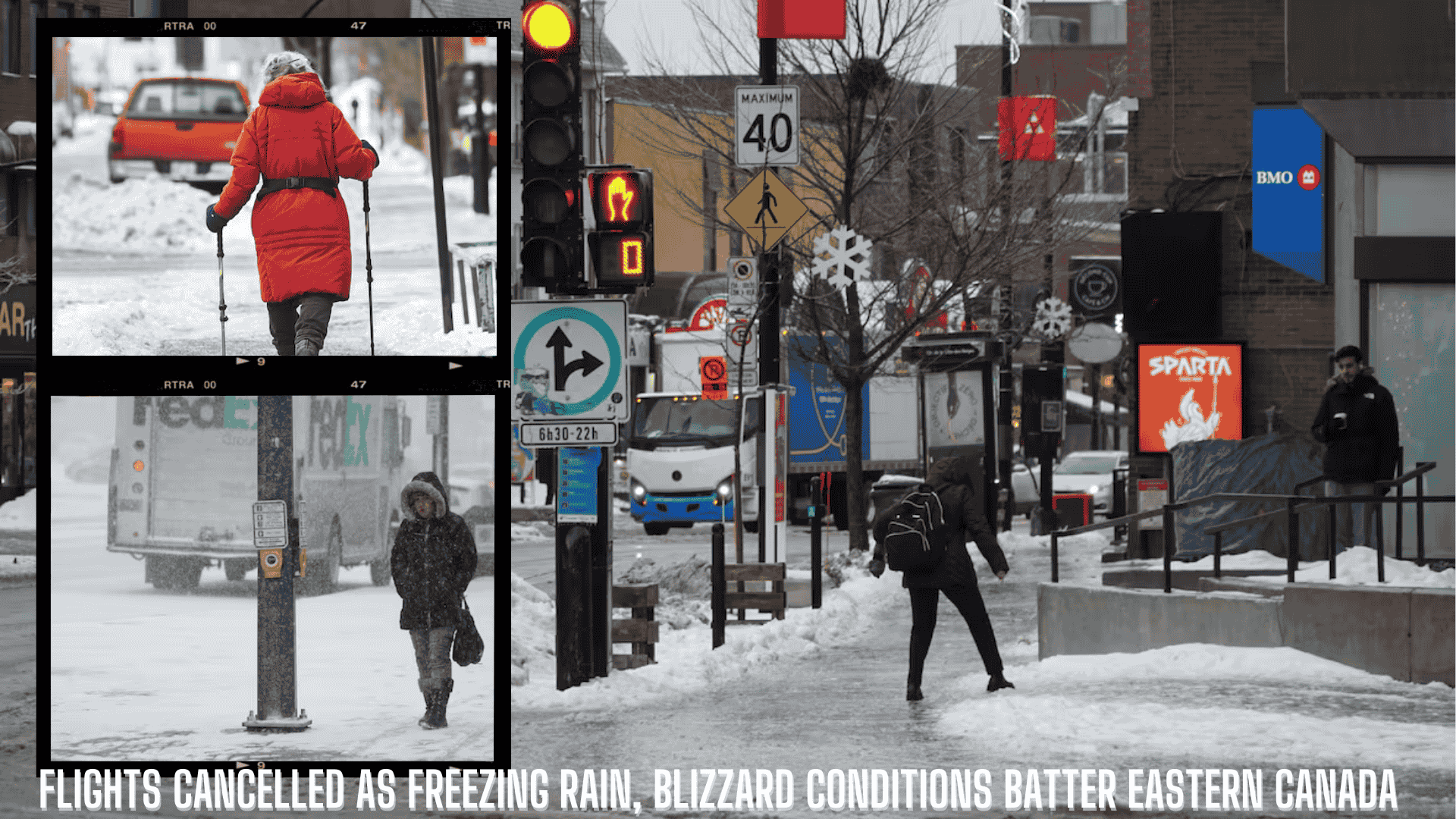
Severe winter weather swept across large parts of Eastern Canada on Monday, grounding flights, disrupting rail services and creating dangerous travel conditions as freezing rain, blizzards and powerful winds lashed the region.
Environment and Climate Change Canada issued orange-level weather alerts—the second-highest warning—for much of Ontario, Quebec and parts of Nova Scotia, cautioning residents against non-essential travel.
Blizzard conditions were reported across Northern Ontario and Quebec, with heavy snowfall and near-whiteout visibility affecting cities such as Sault Ste. Marie, Timmins and Val d’Or. Meteorologists warned that parts of Quebec’s eastern St. Lawrence region could receive 40 to 60 centimetres of snow.
In the Ottawa and Montreal regions, up to 15 millimetres of ice accumulation from freezing rain was forecast between Monday and Tuesday evening. Strong southwesterly winds of 70 km/h, gusting up to 90 km/h in parts of Montreal, further worsened conditions.
Ontario Hit Hard
Toronto, London, and areas along Lake Huron and Georgian Bay were placed under blizzard warnings due to dangerous snow squalls. Environment Canada warned that sudden bursts of snow followed by rapid temperature drops could lead to icy road surfaces and hazardous travel.
In Timmins, snowplow operator Ryan Pilon described near-paralysing conditions.
“It's pretty much whiteout conditions—highways are buried, and it's definitely not safe,” he said, noting that much of the city had effectively shut down.
Flight and Rail Disruptions
Air travel was significantly affected. Montreal’s Trudeau International Airport reported that around 12 per cent of flights were cancelled or delayed. At Toronto Pearson Airport, more than 60 flights were delayed, with several cancellations.
Via Rail cancelled morning services on its Quebec City–Windsor corridor and rescheduled multiple afternoon departures, citing safety concerns. The rail operator said passengers were notified in advance and offered free changes or refunds.
Montreal Slippery and Strained
Montreal streets and sidewalks were coated in thick ice, triggering a surge in emergency calls. Urgences-santé, the regional ambulance service, reported receiving more than 100 emergency calls per hour, mostly related to slip-and-fall injuries.
Spokesperson Valérie Guertin urged residents to stay home if possible and to use ice cleats and exercise caution when walking or driving.
While freezing rain in Montreal turned to regular rainfall later in the day, meteorologists warned that a sharp temperature drop overnight could refreeze surfaces, renewing the danger.
The icy conditions also disrupted the REM light-rail system, causing service slowdowns and shutdowns despite overnight efforts to prevent ice buildup.
Maritimes Brace for Extreme Winds
In the Maritimes, Environment Canada warned of extreme winds reaching up to 140 km/h in northern Nova Scotia. Yellow-level alerts were issued across much of the region for freezing rain, with authorities cautioning about possible flooding in low-lying areas.
Weather officials said the storm system could persist into Tuesday, urging residents to monitor updates and avoid unnecessary travel.